
kAIos: We’re Building on Quicksand With Moving Goalposts
Why AI tool volatility is a vendor-management crisis hiding in plain sight for community banks
Author: Dave Macolino
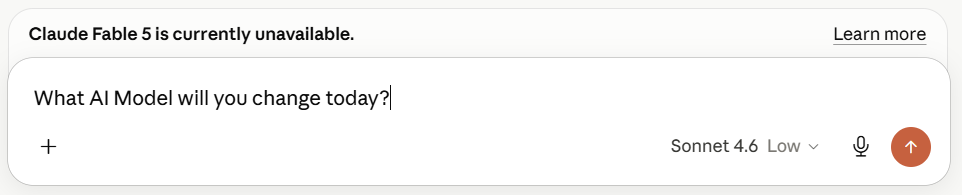
On June 9th, Anthropic dropped the most powerful model they'd ever handed to the public. By June 12th, Claude Fable 5 was just… gone. Switched off. Worldwide. Here's your refund, thanks for playing.
Three days. That's the shelf life now.
I've started calling this whole circus kAIos - the special flavor of chaos where you build your week around an AI tool and it reprices, yanks its best model, or straight-up vanishes before you've finished reading the launch blog.
This isn't me whining about price. I'll happily pay for stuff that works. What I can't stand is that the thing I paid for keeps turning into a different thing while I'm using it. The deal I signed up for is apparently just "current settings, subject to vibes."
And it's not one shady company. It's basically everybody.
GitHub froze new Copilot signups this spring and said the quiet part out loud: agentic coding eats way more compute than a flat monthly fee can cover. So they shoved everyone onto credits and quietly pulled the good models out of tiers people were already paying for. Cursor changed its billing so fast and so badly in 2025 it had to publicly apologize and hand out refunds. And yeah - my own beloved Claude Code has tightened limits more than once with the stealth of a cat burglar. There's a legendary thread out there titled "20x max usage gone in 19 minutes." Just poetry.
Regular folks arguably get it worse, because they lose the actual models. OpenAI killed GPT-4o, the internet revolted, they walked it back… then killed it for good anyway. People had built real daily routines around that thing. A 21,000-name petition got them a polite nothing. Some were attached enough to rebuild a bootleg copy on their own machines just to keep it, which should tell you something about what "deprecating a model" actually does to people.
And if you make things? Sora was the #1 app in the store one minute and a "thanks for the memories, please export your files before we delete them" notice the next. Six months, cradle to grave.
"And sometimes the company isn’t even the one pulling the trigger. That June shutdown up top? Government order — a U.S. export-control directive, dropped against the backdrop of a months-long, very public standoff between Anthropic and Washington over what its models are allowed to do. Regulators, national-security calls, even investor politics can now end your access overnight for reasons that have absolutely nothing to do with you. That’s not me dunking on any one administration or vendor. It’s just a reminder of how many hands are hovering over the off-switch of a tool you were only ever renting. "
Different people, same kick in the teeth:
I organized my work around this, and somebody else switched it off on a schedule I never agreed to.
Here's the annoying part, most of these companies aren't even trying to be evil. They're cornered. The math just doesn't work yet. One autonomous agent running for an hour can torch hundreds of thousands of tokens, and "unlimited" was always a marketing fairy tale the GPUs couldn't afford. So now we navigate a whole petting zoo of credits, tokens, premium requests, daily caps, weekly ceilings, and peak-hour surcharges, like we're buying airline tickets from Spirit Airlines (sorry...too soon?).
But knowing why doesn't make my Tuesday any more plannable.
That's the real cost. Not the dollars, the un-plannability. You can't standardize a team on a tool whose terms reset every quarter. You can't justify getting genuinely good at a model that might be taken out back and whacked before you've gotten your money's worth out of learning it. Every choice now comes with a dumb little volatility tax you pay in hedging and second-guessing.
And this isn't just me being dramatic on the internet, it's showing up in actual budgets. In a May 2026 HCLTech report surveying 467 executives at billion-dollar companies, nearly 43% of major AI initiatives are expected to fail — and the culprit isn't the tech, it's the shrinking window leaders are given to show results before the ground shifts under them again. Turns out it's real hard to commit serious money to a target that won't hold still.
And somehow we've agreed to eat a level of chaos we'd never tolerate anywhere else. Picture your bank changing its fees three times a year, or your accounting software getting switched off on a Friday because some regulator had a rough morning. We'd lose it. With AI? We just sigh, refresh the pricing page, and re-plan. Again.
And here's where this stops being abstract for me. Small and mid-sized community banks are institutions that live and die by predictability. They answer to examiners who want to know exactly which vendors touch their data, change logs for every system, and risk assessments that assume a tool will behave the same way next quarter as it does today. AI governance frameworks at these institutions are still being written - and they're being written around the assumption that the tools they're evaluating today will still exist and behave consistently tomorrow.
Now drop kAIos into that world: a model that vanishes in three days, a vendor that reprices mid-contract, a "deprecation" notice that lands the week before an exam. For a community bank that's not a minor inconvenience - it's an AI vendor risk exposure and a compliance finding waiting to happen. These are lean shops with small IT teams and zero appetite for "subject to vibes." They can't hedge across five tools or rebuild a bootleg model in a basement. When the ground moves, they're the ones standing on it.
Look — I'm not asking anyone to freeze the tech in amber. Some of this turbulence is just what it looks like to live inside something that's genuinely moving at warp-speed. But there's a huge gap between moving fast and moving the goalposts on the people who already paid you.
You know what would help? Real notice before changes, measured in months, not "lol, surprise." Actual grandfathering. Usage meters I can read before I faceplant into the wall instead of after, and some basic promise about how long a model gets to live.
Until then, here's my survival kit, and feel free to adopt this as your own:
Assume nothing is permanent. Keep your prompts portable. Be flexible with multiple platforms. Treat every "unlimited" plan as a number they just haven't shown you yet. The tech really is incredible. I'd just like to stop flinching every time I open my laptop.
Has an AI tool ever pulled the rug out from under you mid-project?
Tell me your horror story — misery loves company. Follow us on LinkedIn and leave a comment here: